Low maintenance hairstyles for women over 60 with fine hair should make everyday styling simpler while preserving as much visible density as possible. Strategic shorter lengths, strong perimeters, soft graduation, and restrained layering can create natural lift without requiring constant teasing, curling, or complicated products.
These nineteen hairstyles combine practical upkeep with flattering volume and modern shape. From easy pixies and bixies to blunt bobs and softly layered crops, each option is designed to work with fine hair rather than demanding extensive daily styling.
Why These Easy-Care Cuts Continue to Work Beautifully
Fine hair often benefits from cuts that create their shape before styling even begins. A clean bob perimeter can make delicate ends appear denser, while short pixies reduce downward weight and allow natural root movement to become more noticeable.
These hairstyles also grow out relatively gracefully when their structure is thoughtfully planned. Longer fringes can blend into facial layers, subtle graduation can soften between trims, and natural texture can replace frequent heat styling. Their practicality gives them enduring appeal well beyond temporary haircut trends.
Soft Tapered Pixie
A soft tapered pixie keeps the neckline and sides neatly shortened while leaving slightly greater length through the crown. Removing unnecessary weight helps fine strands lift more naturally, while the softly blended perimeter prevents the haircut from appearing overly severe or rigid.

After washing, work a small amount of lightweight volumizing mousse through the roots and finger-dry the crown upward. Sweep the front naturally sideways, smooth the tapered areas with your hands, and leave the upper pieces slightly separated for effortless dimension.
Blunt Chin-Length Bob
A blunt chin-length bob preserves density by keeping most strands around one consistent length. The substantial baseline can make fine ends appear noticeably thicker, while the compact proportions eliminate much of the weight that often causes longer, delicate hair to fall flat.

Blow-dry with a paddle brush while lifting slightly around the crown rather than flattening everything against the scalp. Curve the ends gently inward if desired, then use minimal lightweight finishing spray to preserve natural movement throughout the day.
Wash-and-Wear Textured Pixie
A textured pixie works especially well for an uncomplicated routine because deliberately separated layers do not require perfect positioning. Short crown pieces encourage natural movement, while slightly longer sections around the forehead provide enough softness to keep the haircut versatile.

Apply lightweight styling foam to damp hair, then use your fingers to arrange the crown while air-drying or blow-drying briefly. Once dry, separate several pieces with your fingertips and avoid heavy waxes that can quickly collapse fine strands.
Rounded Bob With Minimal Layers
A softly rounded bob creates fullness through its curved silhouette rather than extensive layering, helping fine hair retain valuable density. Minimal internal shaping prevents heaviness while maintaining a clean perimeter that continues looking polished even when styled very simply.

Use a medium round brush during blow-drying to create gentle root lift and turn the ends slightly inward. Keep styling products lightweight, smooth obvious flyaways with your fingertips, and allow the natural rounded shape of the haircut to provide most of the finish.
Long Pixie With Side-Swept Fringe
A longer pixie offers easy short-hair maintenance while retaining enough length through the fringe for versatile facial framing. Side-swept front pieces create graceful movement, while shorter back sections remove weight and encourage subtle elevation through the crown.

Apply a small amount of airy mousse near the roots before directing the crown upward with your fingers. Sweep the fringe naturally toward one side, tuck sections behind the ear when desired, and finish with flexible spray only when additional control is necessary.
Softly Stacked Bob
Gentle graduation through the back gives a softly stacked bob built-in elevation without the dramatic upkeep of heavily stacked versions. Keeping the front sections relatively strong preserves visible density, creating an attractive balance between crown fullness and substantial-looking ends.

Apply root-lifting foam before blow-drying the back with a small round brush. Lift each section briefly, smooth the longer sides downward, and allow the graduation to create the shape rather than relying on teasing or excessive finishing products.
Feathered Short Crop
A feathered crop uses soft, directional layers to create movement around the crown and forehead without demanding precise styling. Lightly swept pieces can give fine hair more dimension, especially when the perimeter remains neat and the layering avoids excessive thinning.

Finger-dry the hair after applying lightweight mousse, directing the upper pieces away from the face. Use a small brush only where additional shaping is needed, then separate the feathered sections gently instead of applying heavy styling paste.
One-Length Short Bob
A one-length short bob is particularly practical for fine hair because its simple structure concentrates density around the perimeter. With few layers to arrange individually, the haircut can look intentional whether worn smooth, naturally straight, or with subtle everyday texture.

Apply lightweight root spray before blow-drying downward with a paddle brush while preserving gentle crown movement. Tuck one side behind the ear for variation, leave the ends clean and substantial, and use dry shampoo between washes when additional root freshness is needed.
Easy Bixie With Soft Layers
A bixie sits comfortably between a bob and pixie, providing short-hair convenience with additional softness around the ears and forehead. Restrained layers create movement without sacrificing too much density, making the hybrid shape especially suitable for fine strands.

Work airy volumizing foam through damp roots and finger-dry the crown in its natural direction. Sweep the longer front pieces sideways, allow the perimeter to remain softly separated, and use minimal texture spray when the hairstyle needs additional definition.
Short Bob With Side Part
A side part instantly shifts more hair toward one section of the crown, helping a straightforward short bob appear naturally fuller. Keeping the lower perimeter relatively blunt preserves density while the asymmetrical part provides movement without requiring additional layers.

Create the part while the hair is damp and briefly dry the fuller section in the opposite direction. Flip it back into place for natural elevation, smooth the ends lightly, and avoid heavy serum around the roots.
Cropped Pixie With Soft Bangs
A cropped pixie minimizes daily styling while soft bangs keep the short silhouette gentle around the forehead. Slightly longer crown pieces provide enough movement for fine hair to avoid appearing flat, while compact sides make the overall haircut particularly manageable.

Apply lightweight mousse after washing and finger-dry the crown upward while directing the bangs softly forward. Separate several pieces after drying, keep the sides naturally controlled, and skip heavy styling products unless individual sections need extra definition.
French Bob With Light Fringe
A French bob offers a sophisticated jaw-length shape that can remain surprisingly uncomplicated when the perimeter stays strong. Light fringe introduces softness around the forehead without removing the amount of hair required for dense, heavy bangs.

Style the fringe first with gentle airflow, then blow-dry or air-dry the remaining bob according to your natural texture. Add slight root elevation with your fingertips, keep the ends substantial, and embrace subtle imperfections rather than repeatedly smoothing every strand.
Short Wavy Bob
A short wavy bob uses natural bends to create dimension, making it especially convenient when fine hair already carries some movement. A simple perimeter preserves density while the waves prevent individual strands from settling uniformly against the head.

Apply lightweight wave foam to damp hair and scrunch gently upward before air-drying or diffusing briefly. Once completely dry, loosen only selected sections with your fingers and avoid brushing through the finished texture, which can reduce definition.
Tapered Pixie Bob
A tapered pixie bob combines neat lower sections with additional crown and front length, creating a naturally dimensional silhouette. The gradual transition provides enough softness for versatile styling while keeping the neckline compact and straightforward to manage between washes.

Apply volumizing mousse near the crown before finger-drying the longer pieces upward and sideways. Smooth the tapered sections using your hands, arrange the fringe naturally, and finish with lightweight spray only where additional hold is genuinely needed.
Collarbone Lob With Blunt Ends
A collarbone lob provides an option for women who prefer more length without sacrificing the fuller appearance created by blunt ends. Minimal layering keeps fine strands concentrated around the perimeter, helping the hairstyle look substantial while remaining easy to style.

Blow-dry with a paddle brush while lifting gently around the roots, then leave the lower lengths mostly straight or softly curved. Use dry shampoo when needed for extra crown lift, and avoid excessive oils that can make longer fine hair appear flatter.
Short Bob With Wispy Bangs
Wispy bangs create delicate facial framing without requiring the density of a heavy fringe, making them particularly suitable for finer hair. Paired with a stronger short bob perimeter, they introduce softness while allowing most strands to remain concentrated around the ends.

Dry the bangs first using gentle airflow, then shape the bob with your fingers or a round brush. Maintain slight crown elevation, separate the fringe naturally, and use only a small amount of lightweight finishing spray.
Brushed-Back Short Crop
A brushed-back crop opens the face while creating useful elevation through the upper sections. Keeping the sides shorter makes the crown appear fuller by contrast, and the directional styling can be achieved quickly without elaborate curling or individual layer placement.

Apply airy mousse through damp crown hair before blow-drying backward with your fingers or a small brush. Keep the sides smooth, lift the front gently rather than teasing it, and finish with flexible spray for soft, lasting control.
Layered Bob With Long Side Fringe
A lightly layered bob creates controlled movement while a long side fringe provides soft facial framing without demanding frequent bang trims. Restrained layering is important for fine hair because it preserves density through the perimeter while preventing the overall shape from appearing static.

Apply root-lifting foam before blow-drying with gentle crown elevation. Direct the fringe toward one side, curve the lower sections subtly, and leave the layers softly blended rather than separating every piece with styling product.
Natural Texture Pixie
A natural texture pixie minimizes styling effort by working with existing bends, waves, or irregular movement instead of forcing a perfectly smooth finish. Short proportions reduce weight, while slightly longer crown sections give fine hair enough space to develop visible texture.
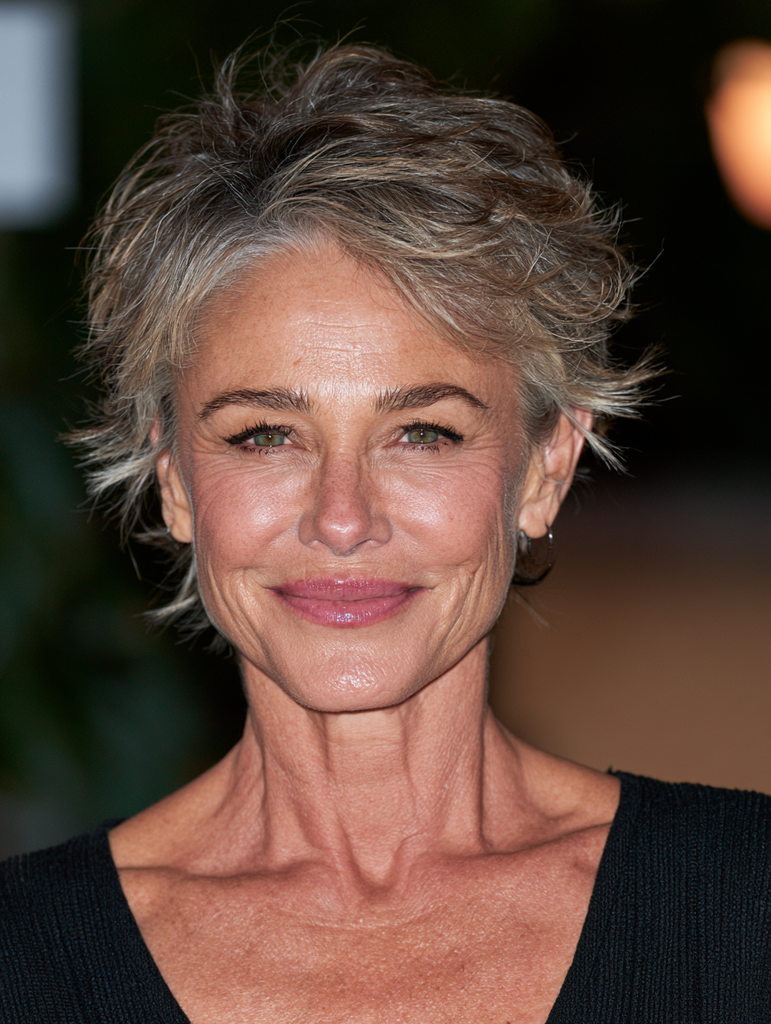
Apply a small amount of lightweight mousse or texture foam after washing and arrange the hair with your fingers. Air-dry whenever practical, lift the crown gently once dry, and allow natural variations throughout the texture to remain visible.
How to Style Low Maintenance Hairstyles for Over 60 With Fine Hair
Keep the routine simple by choosing lightweight products that support fine strands instead of coating them. Volumizing mousse, root spray, and dry shampoo can provide useful lift, while rich oils and heavy creams may make delicate hair collapse quickly. Concentrate most volumizing product around the roots rather than the ends.
Whenever possible, let the haircut provide the structure. Finger-drying, gentle round-brush lifting, natural waves, and strategic part changes can create enough movement without daily curling or teasing. Regular trims also help simple shapes remain easy to manage.
Final Thoughts
Low maintenance hairstyles for women over 60 with fine hair do not need to sacrifice style for convenience. Tapered pixies, blunt bobs, easy bixies, softly stacked cuts, natural texture crops, and simple lobs can create attractive fullness while reducing daily styling demands.
Choose a haircut that works with your natural texture, density, and preferred routine rather than requiring constant correction. When strong shape and sensible volume placement are built into the cut, fine hair can look polished, fuller, and modern with surprisingly little effort.
