Hairstyles for thin fine hair over 50 work best when they create shape without removing too much valuable density. Strong perimeters, strategic crown lift, restrained layering, and lightweight texture can help delicate strands appear fuller while keeping everyday styling practical. The goal is movement and dimension rather than excessive teasing or complicated maintenance.
These nineteen hairstyles include pixies, bobs, lobs, shags, and medium-length cuts designed around fine hair. Each offers a different approach to enhancing visible fullness while maintaining a modern, age-confident finish.
The Smart Volume Placement That Gives These Hairstyles Lasting Appeal
Fine-hair styles remain dependable after 50 when their fullness comes from thoughtful cutting rather than temporary styling tricks. Shorter lengths reduce downward weight, blunt outlines preserve density, and subtle graduation can elevate the crown without leaving the perimeter noticeably sparse.
These foundations also adapt as hair changes over time. Bangs can become longer facial layers, stacked bobs can soften during growth, and pixies can transition into bixies. Such flexibility keeps these hairstyles practical while allowing women to adjust length, texture, and maintenance gradually.
Soft Layered Pixie With Side Bangs
A softly layered pixie reduces the weight that can pull fine strands flat while keeping enough crown length for visible movement. Longer side bangs create gentle facial framing, whereas restrained layering prevents the upper sections from becoming excessively thin or feathered.

Apply lightweight volumizing mousse to damp roots before finger-drying the crown upward. Sweep the fringe diagonally with a small brush, separate several upper pieces using minimal styling paste, and avoid heavy finishing products that could collapse the lift.
Blunt Chin-Length Bob
A blunt chin-length bob keeps most strands at one level, creating a strong perimeter that makes fine ends appear noticeably denser. The compact length also removes unnecessary weight, helping natural root movement remain visible instead of being stretched downward.

Apply root-lifting mousse before blow-drying with a paddle or round brush. Maintain gentle elevation through the crown, keep the perimeter relatively straight, and use lightweight texture spray through the lower sections for movement without sacrificing the substantial outline.
Textured Bixie With Long Fringe
A textured bixie combines pixie lightness with enough bob-inspired length to create softness around the ears and forehead. Longer fringe adds flexible facial framing, while controlled crown layers introduce dimension without removing too much density from already fine strands.

Work airy mousse through damp roots before finger-drying the upper sections in several directions. Sweep the fringe toward one side, define selected crown pieces with lightweight texture cream, and keep the perimeter softly blended for natural-looking fullness.
Stacked Bob With Crown Lift
A stacked bob uses subtle graduation through the back to create built-in crown elevation, making it especially useful when fine hair tends to lie flat. Longer front sections preserve density while balancing the shorter, fuller shape through the back.

Apply volumizing foam before blow-drying the graduated sections with a small round brush. Lift each section gently from the roots, smooth the longer front pieces downward, and finish with flexible hairspray concentrated around the crown rather than the ends.
Feathered Pixie Bob
A feathered pixie bob creates airy movement through the upper sections while maintaining enough length around the perimeter for softness. Carefully controlled feathering can make fine hair appear dimensional, provided the ends are not thinned excessively during cutting.

Apply lightweight mousse before blow-drying the crown upward and slightly backward. Direct the feathered front pieces away from your face, allow them to cool, and separate the layers gently with your fingertips before adding flexible finishing spray.
Side-Parted French Bob
A French bob creates a compact, sophisticated shape, while a side part shifts additional hair toward one section of the crown for immediate elevation. Keeping the perimeter strong helps fine strands appear denser, especially when layering remains minimal.

Establish the side part while damp before blow-drying the fuller section briefly against its final direction. Flip it back for lift, curve the ends softly, and finish with lightweight texture spray for a polished yet naturally movable result.
Short Shag With Wispy Bangs
A restrained short shag can give fine hair valuable crown movement without leaving the lower sections excessively sparse. Wispy bangs provide soft forehead framing, while strategically positioned layers create separation and texture through the upper portion of the haircut.

Apply root-lifting foam before finger-drying the crown in several directions. Style the bangs using gentle airflow, add subtle bends through selected layers, and finish with dry texture spray while keeping the lower perimeter relatively substantial.
Collarbone Lob With Curtain Bangs
A collarbone lob provides additional length while maintaining enough structure to keep fine hair from appearing shapeless. Long curtain bangs create movement around the cheekbones, while a relatively blunt lower perimeter preserves visible density through the ends.

Dry the fringe forward before dividing it through the center and directing each side outward. Blow-dry the remaining lengths with gentle root elevation, add broad curves through the ends, and finish with lightweight volumizing spray around the crown.
Short Rounded Bob
A short rounded bob creates smooth fullness around the head through controlled shaping rather than extensive layering. Keeping the perimeter clean and substantial makes fine hair appear thicker, while subtle crown elevation prevents the compact silhouette from looking flat.

Apply airy mousse to damp roots before blow-drying with a medium round brush. Lift gently through the crown, curve the ends inward without overworking them, and use flexible hairspray to preserve the rounded shape while maintaining natural movement.
Tapered Pixie With Swoopy Fringe
A tapered pixie keeps the sides and neckline compact while preserving additional length through the crown and fringe. This contrast creates visible upper volume, while a sweeping front section provides softness and enough versatility for different everyday finishes.

Work volumizing foam through damp crown hair before blow-drying upward. Sweep the longer fringe diagonally with a small round brush, keep the tapered sides controlled, and define several upper pieces using minimal lightweight styling cream.
Wavy Bob With Deep Side Part
Loose waves create visual dimension through fine hair, while a deep side part naturally increases root elevation around the crown. Keeping the waves broad and irregular helps the bob appear fuller without producing an overly styled or rigid silhouette.

Apply heat protectant and lightweight mousse before drying the roots with gentle lift. Create relaxed alternating bends through selected sections, leave several ends straighter, flip the deeper part into place, and finish with flexible texture spray.
Layered Lob With Face-Framing Pieces
A softly layered lob provides movement while keeping most of the lower perimeter intact for visible density. Longer face-framing pieces introduce dimension around the cheekbones and jaw without requiring aggressive layering throughout the entire haircut.

Apply volumizing mousse primarily around the roots before blow-drying with a round brush. Direct the facial layers away from your face, maintain gentle crown lift, curve the lower ends softly, and finish with lightweight flexible spray for natural movement.
Cropped Pixie With Textured Crown
A cropped pixie removes significant length, allowing fine strands to stand away from the scalp more easily. Keeping slightly longer pieces through the crown creates texture and height, while shorter sides emphasize the upper movement without requiring extensive daily styling.

Apply lightweight mousse to damp hair and finger-dry the crown upward in alternating directions. Define several pieces with a tiny amount of matte paste, keep the sides relatively smooth, and avoid heavy oils that could flatten the finished shape.
Inverted Bob With Soft Graduation
An inverted bob uses shorter back sections and gradually longer front pieces to create dimensional structure. Gentle graduation provides natural crown lift, while retaining substantial front lengths helps fine hair maintain enough density around the face and jawline.

Apply root-lifting foam before blow-drying the back with a small round brush. Smooth the longer front sections downward, emphasize the graduated silhouette rather than adding excessive curls, and finish with lightweight serum only through the ends.
Shoulder-Length Hair With Soft Layers
Shoulder-length hair can remain flattering for fine strands when layering stays subtle and the lower perimeter retains density. A few longer layers introduce movement without creating transparent ends, while gentle crown elevation prevents the additional length from appearing flat.

Apply lightweight volumizing mousse before blow-drying the roots upward with a round brush. Shape the longer layers into broad curves, keep the ends substantial, and use flexible hairspray sparingly so the finished hairstyle remains touchable and naturally movable.
Bob With Feathered Side Bangs
Feathered side bangs create delicate movement around the forehead while blending smoothly into a strong bob perimeter. Their diagonal direction provides dimension without requiring extensive layering, helping fine hair retain valuable density throughout the sides and ends.

Style the fringe first with a small round brush, directing it softly toward one side. Blow-dry the bob with gentle crown elevation, curve the perimeter slightly inward, and separate the feathered pieces after cooling for an airy finish.
Tousled Short Bob
A tousled short bob creates the impression of additional density by encouraging strands to overlap in different directions. Keeping the haircut relatively blunt underneath the texture preserves a substantial perimeter, while irregular bends introduce dimension through the middle lengths.

Apply volumizing mousse before rough-drying with your fingers for natural root elevation. Create subtle bends through selected sections, avoid curling every piece identically, and finish with dry texture spray while gently separating the upper layers.
Long Pixie With Side-Swept Layers
A long pixie retains enough length through the crown and fringe for styling versatility while reducing the weight associated with longer hair. Side-swept layers create directional movement, helping fine strands appear dimensional without requiring excessive teasing or complicated shaping.

Apply lightweight root mousse before blow-drying the upper sections toward one side. Lift gently around the crown, shape the longer fringe diagonally, and use minimal texture cream through selected pieces to create separation without sacrificing volume.
One-Length Lob With Off-Center Part
A one-length lob concentrates density around the perimeter, making fine ends appear stronger while preserving versatile medium length. An off-center part prevents the upper silhouette from becoming overly symmetrical and creates subtle natural elevation around one side of the crown.
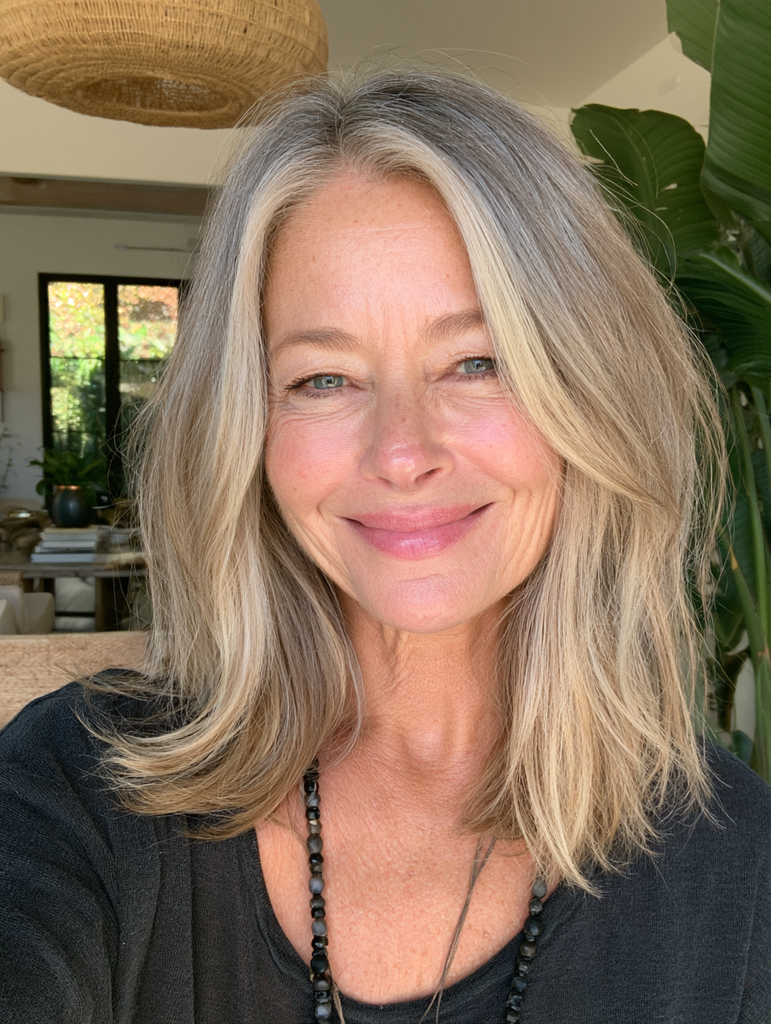
Apply heat protectant and root-lifting spray before blow-drying downward with a paddle brush. Maintain slight crown movement, keep the ends clean and substantial, and add a gentle bend through selected sections if additional texture is desired.
How to Style Hairstyles for Thin Fine Hair Over 50
Start with lightweight products that support individual strands without coating them heavily. Root-lifting sprays, airy mousses, dry shampoos, and fine texture sprays generally provide more useful volume than rich creams or oils. Concentrate most volumizing products around the roots and crown.
Blow-drying against the natural direction briefly can create additional elevation before placing the hair into its final shape. When using heat, apply protection first and avoid repeatedly passing tools over delicate strands. Gentle styling preserves both movement and the appearance of density.
Final Thoughts
Hairstyles for thin fine hair over 50 can feel modern, dimensional, and sophisticated without depending on extreme layering or constant teasing. Strong bobs, softly stacked cuts, textured pixies, bixies, lobs, and restrained shags each create fullness through different structural techniques.
Prioritize density-preserving cuts, strategic crown movement, and lightweight styling products. The right hairstyle should complement your natural texture and daily routine while giving fine hair a fuller appearance that feels comfortable, polished, and genuinely suited to your personal style.
