Choppy bob haircuts can give fine hair impressive dimension when the layers are strategically placed rather than excessively thinned. Uneven ends, subtle crown movement, face-framing pieces, and lightweight texture can break up flatness while maintaining enough density through the perimeter. The result feels fuller, relaxed, and modern without demanding complicated styling.
These seventeen choppy bob haircuts for fine hair range from short jaw-length shapes to longer bobs with bangs, waves, and graduated details. Each idea balances visible texture with the density fine strands need.
The Dimensional Shape That Keeps Choppy Bobs Fresh
Choppy bobs remain relevant because their movement comes from adaptable cutting techniques rather than one highly specific trend. Layer placement can become softer or stronger depending on density, while bangs, parting, and length can change without removing the haircut’s textured character.
Fine hair particularly benefits from this flexibility. A strong perimeter can remain intact while selected layers create separation above it, allowing the style to appear airy without looking sparse. As the haircut grows, its irregular texture can transition naturally into a tousled lob.
Choppy Chin-Length Bob
A chin-length bob gains noticeable movement from carefully scattered choppy pieces while maintaining a substantial lower perimeter. Keeping most layering above the ends prevents fine hair from appearing transparent, allowing the haircut to combine visible texture with a fuller-looking baseline.

Apply lightweight volumizing mousse to damp roots before blow-drying with gentle crown elevation. Add irregular bends through selected sections using a flat iron, leave several ends straight, and finish with dry texture spray for airy separation without stiffness.
Choppy Bob With Wispy Bangs
Wispy bangs introduce delicate forehead movement while choppy layers create dimension through the crown and sides. Keeping the fringe lightweight preserves valuable density throughout the remaining haircut, while slightly uneven ends give the bob an intentionally relaxed appearance.

Style the bangs first using gentle airflow, then apply root-lifting foam around the crown. Finger-dry the remaining sections, create subtle bends where additional movement is needed, and finish with lightweight texture spray through the middle lengths.
Side-Parted Choppy Bob
A side part shifts additional hair toward one side of the crown, creating immediate lift that complements choppy layering beautifully. Irregular pieces through the upper sections provide dimension, while a stronger perimeter prevents fine strands from appearing excessively feathered.

Create the part while damp and blow-dry the fuller section briefly against its final direction. Flip it back for elevation, define selected ends with a flat iron, and mist dry texture spray underneath the crown for lightweight support.
Short Choppy French Bob
A French bob becomes more relaxed when its traditional jaw-skimming shape incorporates subtle choppy texture. Maintaining a relatively blunt foundation gives fine hair visual density, while scattered surface layers prevent the compact haircut from appearing overly rigid or severe.

Apply volumizing mousse before blow-drying the roots with your fingers. Add slight bends through random sections, keep several perimeter pieces straighter, and finish with texture spray while gently separating the surface layers for effortless movement.
Choppy Bob With Curtain Bangs
Curtain bangs provide soft facial framing while choppy bob layers create airy movement around the crown and ends. Their longer outer sections blend naturally into the haircut, preventing a dramatic separation between fringe and sides while preserving overall density.

Dry the bangs forward before dividing them through the center and directing each side outward. Rough-dry the bob for root lift, add irregular bends through selected pieces, and finish with flexible texture spray for touchable definition.
Tousled Choppy Bob
A tousled choppy bob uses irregular texture to make individual fine strands appear more dimensional. Overlapping sections create the impression of additional fullness, while retaining a reasonably strong perimeter ensures the hairstyle does not become visibly sparse around the ends.

Work airy mousse through damp roots before rough-drying with your fingers. Create loose alternating bends throughout selected sections, avoid curling every piece identically, and finish with dry texture spray while gently tousling the crown and middle lengths.
Choppy Inverted Bob
An inverted bob combines shorter graduated back sections with longer pieces around the face, creating natural crown elevation. Adding restrained choppy texture through the surface introduces movement without undermining the strong dimensional structure that makes this cut useful for fine hair.

Apply root-lifting foam before blow-drying the graduated back with a small round brush. Smooth the longer front sections downward, define several upper pieces with texture spray, and keep the lower perimeter relatively substantial.
Wavy Choppy Bob
Loose waves amplify the movement created by choppy layers, giving fine hair a naturally fuller appearance. Keeping the waves broad and irregular prevents the hairstyle from becoming overly curled, while straighter ends reinforce the modern, deliberately undone character.

Apply heat protectant and lightweight mousse before drying with gentle root elevation. Create alternating bends through medium sections, leave the final inch of several pieces straight, and loosen everything with your fingertips before applying flexible texture spray.
Choppy Bob With Side-Swept Bangs
Side-swept bangs create graceful diagonal movement while connecting smoothly with choppy facial layers. The directional fringe adds softness around the forehead, whereas lightly separated crown sections provide enough texture to prevent fine hair from lying uniformly flat.

Blow-dry the fringe diagonally using a small round brush before finger-drying the remaining hair. Add subtle bends through selected layers, maintain gentle crown elevation, and finish with lightweight spray that preserves movement rather than creating rigidity.
Blunt Choppy Bob
A blunt choppy bob combines two seemingly opposite techniques by maintaining a strong baseline while adding subtle irregular texture above it. This balance works particularly well for fine hair because the ends retain density while the surface gains movement.

Apply lightweight volumizing foam before blow-drying the bob with slight root lift. Keep the perimeter relatively straight, create small bends through scattered upper sections, and use dry texture spray sparingly to emphasize separation without roughening the ends excessively.
Choppy Bob With Face-Framing Layers
Longer face-framing pieces give a choppy bob directional movement without requiring aggressive layering throughout the entire haircut. Beginning the shorter sections around the cheekbones creates softness, while maintaining density through the lower perimeter keeps fine hair looking substantial.

Apply root mousse before blow-drying the crown with gentle elevation. Direct the facial layers away from your face, create subtle bends through several upper sections, and finish with lightweight texture spray concentrated away from the delicate ends.
Choppy Stacked Bob
A choppy stacked bob uses graduated back layers to build crown fullness while surface texture creates visible separation. Keeping the front sections longer and relatively substantial balances the shorter back, giving fine hair dimension without making the overall silhouette appear thin.

Blow-dry the graduated sections upward with a small round brush after applying volumizing foam. Define selected crown pieces using dry texture spray, smooth the longer sides gently, and avoid heavy wax that could collapse the stacked volume.
Choppy Bob With Bottleneck Bangs
Bottleneck bangs create curved facial framing through shorter center pieces and longer outer edges, while choppy bob layers provide relaxed movement below. The blended fringe adds interest without requiring a dense, wide bang that could reduce fullness elsewhere.

Dry the center fringe forward before directing the longer edges outward. Finger-dry the remaining bob for natural root lift, add irregular bends through selected sections, and finish with flexible texture spray for softly separated definition.
Choppy Pixie Bob
A choppy pixie bob combines compact back sections with longer textured pieces around the crown, ears, and forehead. Reduced length removes weight from fine strands, while deliberate separation through the upper layers creates the impression of greater density and movement.

Apply airy mousse to damp roots before finger-drying the crown upward. Sweep longer front pieces sideways, define selected ends with minimal matte paste, and keep the shorter perimeter controlled so the upper texture remains prominent.
Choppy Collarbone Bob
A collarbone bob provides additional length while strategically choppy upper layers prevent fine hair from appearing flat. Keeping the bottom sections relatively dense is essential, allowing the haircut to maintain a strong outline despite its lighter movement through the surface.

Apply lightweight mousse around the roots before blow-drying with a paddle brush. Create broad irregular bends through the upper sections, keep the lower ends substantial, and finish with dry texture spray for soft movement around the crown.
Choppy Bob With Flipped Ends
Flipped ends add playful direction to a choppy bob while reinforcing the separation between individual layers. Keeping the outward curves slightly irregular creates visual texture, helping fine strands appear more animated without requiring excessive thinning or dramatic graduation.

Apply volumizing foam before blow-drying with gentle crown lift. Turn selected lower pieces outward using a small round brush or flat iron, leave several sections straight, and finish with flexible hairspray underneath the flipped ends.
Soft Choppy Bob With Long Fringe
A softer choppy bob uses subtle layering rather than dramatically disconnected pieces, making it ideal when fine hair needs movement without losing density. A longer fringe blends into the sides, providing flexible facial framing and additional directional interest.
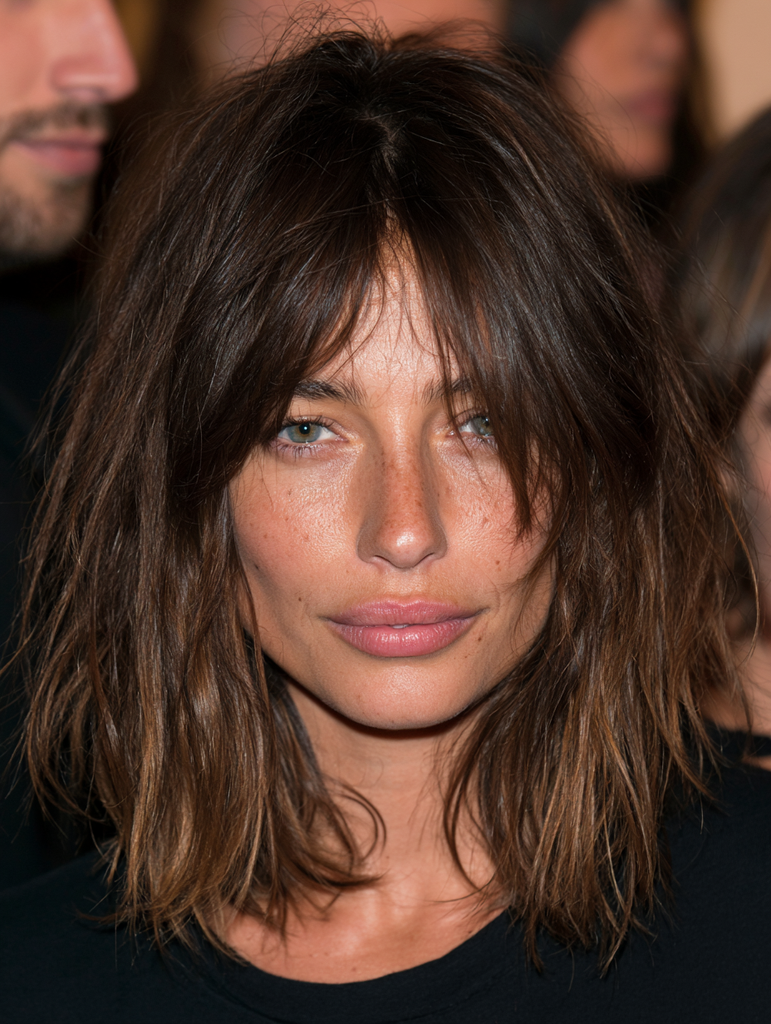
Work lightweight mousse through damp roots before finger-drying for natural elevation. Sweep the long fringe diagonally or divide it near the center, create understated bends through selected layers, and finish with minimal dry texture spray.
How to Style Choppy Bob Haircuts for Fine Hair
Fine hair benefits from lightweight products that create grip without coating the strands heavily. Start with volumizing mousse or root spray, then blow-dry the crown against its natural direction briefly for additional lift. Texture spray can emphasize choppy separation once the hair is completely dry.
Avoid curling every section identically because irregular movement makes choppy layers more visible. Alternate bend directions, leave several ends straighter, and use styling paste sparingly. Excessive oils, waxes, or rich creams can quickly flatten fine hair and reduce the airy effect.
Final Thoughts
Choppy bob haircuts for fine hair can create noticeable dimension without sacrificing the density delicate strands need. Blunt foundations, textured crowns, soft waves, side parts, stacked backs, and lightweight bangs provide numerous ways to personalize this versatile haircut.
The key is controlled layering rather than removing hair indiscriminately. When the perimeter remains substantial and texture is strategically placed, a choppy bob can make fine hair appear fuller, more animated, and effortlessly modern while keeping everyday styling manageable.
