Polynesian tattoos are known for their bold black patterns, intricate geometry, and deep cultural significance. Tattoo traditions across Polynesia—including those of Samoan, Māori, Marquesan, Hawaiian, and Tahitian peoples—are distinct rather than one single style. Depending on the specific tradition and design, tattoos may communicate identity, genealogy, community, achievements, responsibilities, or personal history. Today, Polynesian-inspired tattoo ideas range from traditional compositions created within their cultural contexts to contemporary designs influenced by Pacific visual traditions.
How to Choose the Right Polynesian Tattoo
Start by researching the specific Polynesian culture and tattoo tradition that interests you rather than treating all Polynesian designs as interchangeable. Many motifs and placements can carry cultural or familial significance, so avoid choosing symbols solely from generic online meaning charts. If cultural authenticity is important, work with a knowledgeable Polynesian tattoo practitioner or an artist experienced in the specific tradition. Shoulders, upper arms, chests, backs, thighs, calves, and sleeves provide space for larger patterns that follow the body’s natural contours.
Polynesian Tattoo Ideas
This Polynesian-inspired hand and forearm tattoo uses a striking flowing composition that follows the natural contours of the wrist and hand. Bold black bands are filled with geometric motifs, including triangles, angular shapes, repeated lines, and curved ornamental details.

The design begins as a substantial patterned section around the forearm before narrowing dramatically across the wrist. From there, an elegant curved strip travels along the back of the hand and loops around a finger-like area, creating an almost jewelry-inspired effect. Strong blackwork contrasts effectively with exposed skin, while the combination of structured geometry and sweeping curves gives the tattoo movement, balance, and visual sophistication.
Image 2
This Polynesian-inspired forearm tattoo combines bold tribal geometry with a prominent hibiscus flower, creating an appealing contrast between structured and organic forms. Long, pointed sections sweep vertically along the forearm, giving the composition an elongated, almost spear-like silhouette. Inside these shapes are repeating triangles, diagonal lines, woven patterns, and shaded geometric segments characteristic of contemporary Polynesian-style tattooing.

At the center, the softly shaded hibiscus becomes the main focal point, introducing a tropical and graceful element to the otherwise angular design. Strategic areas of untouched skin separate the patterned sections, keeping the tattoo visually open while emphasizing its dramatic curves and symmetrical overall flow.
Image 3
This elaborate Polynesian-inspired forearm tattoo centers on a realistically rendered sea turtle surrounded by decorative tribal patterns and three delicate tropical flowers. The turtle occupies the central portion of the composition, with detailed stippling and shading giving its body and shell a textured, dimensional appearance. Around it, sweeping bands contain geometric shapes, repeated angular motifs, spirals, curved lines, and patterned borders.
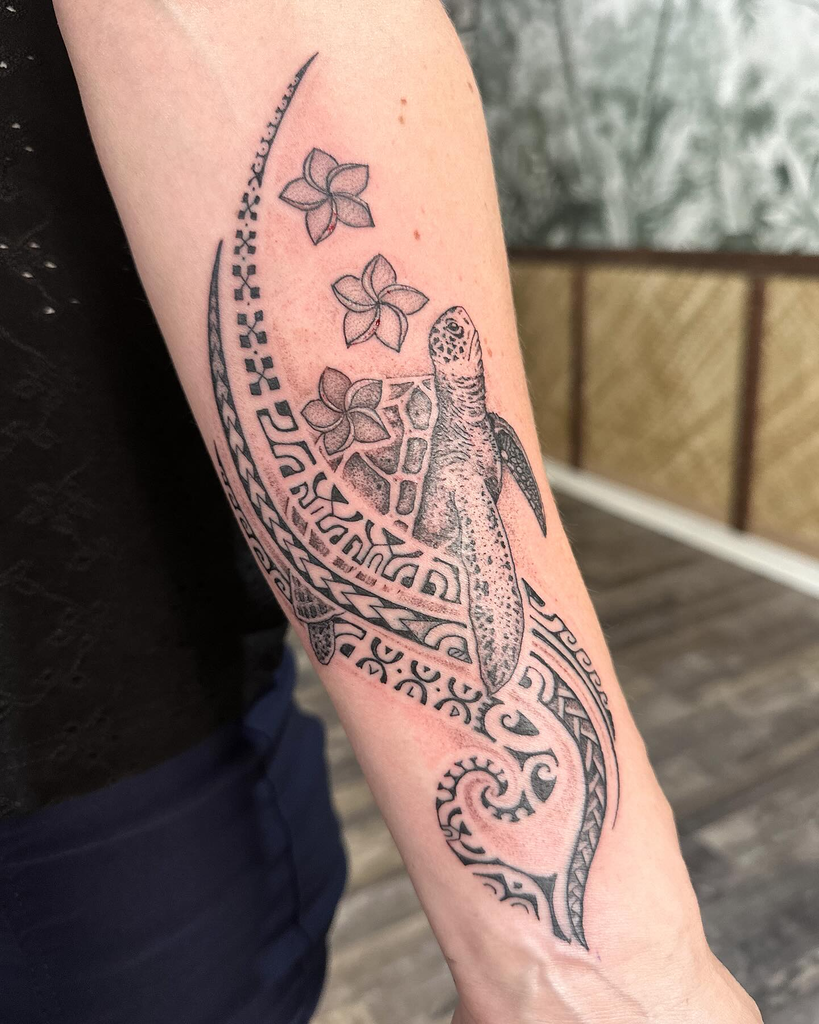
The three flowers soften the stronger tribal geometry and create an attractive tropical connection with the marine subject. Rather than forming a solid sleeve, the tattoo incorporates generous negative space, allowing individual elements to remain distinct while creating a flowing composition from wrist to upper forearm.
Image 4
This bold Polynesian-style forearm sleeve is built from multiple horizontal and diagonal bands packed with contrasting geometric patterns. Large black triangles create a strong upper border, while overlapping diamond forms, chevrons, angular pathways, linear textures, and repeated star-like motifs divide the forearm into visually distinct sections.

Some areas use dense black shading, while others rely on fine parallel lines and open skin to create depth and separation. The layered arrangement resembles a woven or carved surface, giving the tattoo a substantial architectural quality. Extending from below the elbow toward the wrist, the design wraps naturally around the forearm and creates a powerful, cohesive blackwork statement.
Image 5
This Polynesian-inspired forearm tattoo features a dense, vertically organized arrangement of geometric and organic motifs. Broad black sections frame narrow areas of untouched skin, producing dramatic contrast and helping the different patterns remain clearly defined. Repeated leaf-like forms, diagonal bands, interlocking shapes, fine line textures, and pointed elements create a strong sense of direction from the elbow toward the wrist.

Near the center, a prominent curved hook or wave-like motif interrupts the otherwise angular structure and becomes a visual focal point. The tattoo is carefully adapted to the forearm’s shape, with elongated panels emphasizing its length while intricate interior details provide texture and complexity.
Image 6
This large Polynesian-style leg tattoo creates an impressive near-full lower-leg composition extending from above the knee area down toward the ankle. The design is divided into broad diagonal and curved sections filled with numerous motifs, including triangles, chevrons, leaf-like patterns, spirals, repeated arrow forms, woven textures, and linear borders.

Heavy blackwork separates the individual panels and gives the tattoo exceptional visual structure. Negative-space pathways weave through the composition, preventing the extensive patterning from appearing overly crowded. The tattoo follows the natural shape of the thigh, knee, calf, and ankle, producing a continuous wraparound appearance with strong rhythm, movement, and architectural complexity.
Image 7
This Polynesian-inspired ankle tattoo forms a compact ornamental band that wraps around the lower leg just above the foot. Its composition relies on layered geometric sections containing overlapping diamond shapes, angular chevrons, fine parallel lines, and repeated textured patterns. The arrangement follows the circumference of the ankle, making the tattoo resemble a permanent decorative cuff or anklet. Moderate black shading adds depth to selected areas without overwhelming the finer linework, while exposed skin provides contrast between the individual motifs.
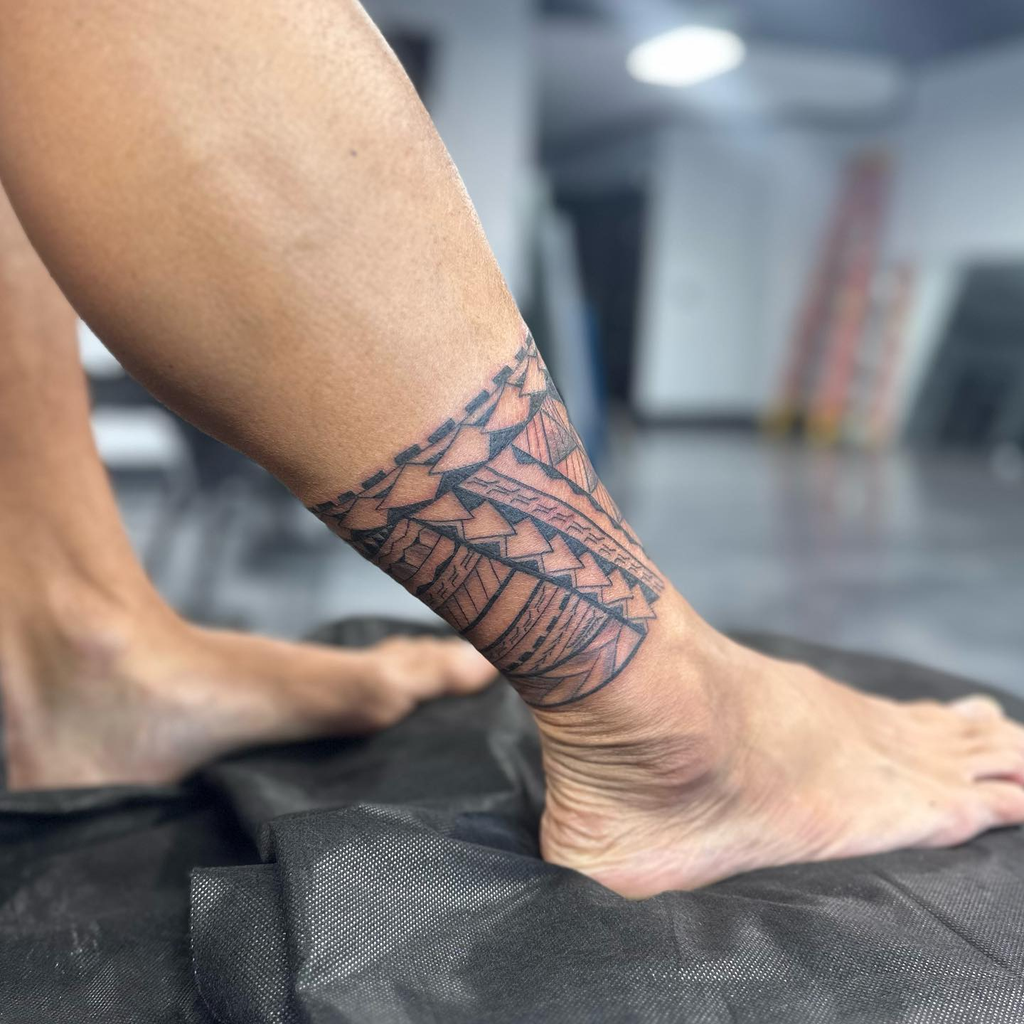
Because the design is relatively narrow and localized, it offers a more understated interpretation of Polynesian-style tattooing while still maintaining the bold geometry and rhythmic repetition associated with the aesthetic.
Image 8
This Polynesian-inspired forearm tattoo uses sweeping curved bands to organize an intricate collection of geometric patterns. Large arcs travel diagonally across the arm, dividing the composition into sections filled with chevrons, triangles, woven shapes, parallel lines, leaf-like forms, and spiral details. Black shading is concentrated within selected motifs and borders, while substantial areas of natural skin remain visible, creating strong contrast and improving pattern clarity.

The design appears carefully shaped around the forearm rather than arranged as a simple rectangular panel. Its combination of flowing curves and repetitive angular geometry creates a dynamic sense of movement, making the tattoo feel both structured and organically connected to the arm.
Image 9
This elegant Polynesian-inspired ankle and foot tattoo combines flowing tribal geometry with a delicate plumeria-style flower. Two elongated, curved sections extend in opposite directions from the floral centerpiece, creating a graceful composition that follows the ankle’s natural contours. The upper section rises along the lower leg and contains repeating triangular and leaf-like patterns, while the lower section sweeps across the top of the foot with alternating geometric segments.
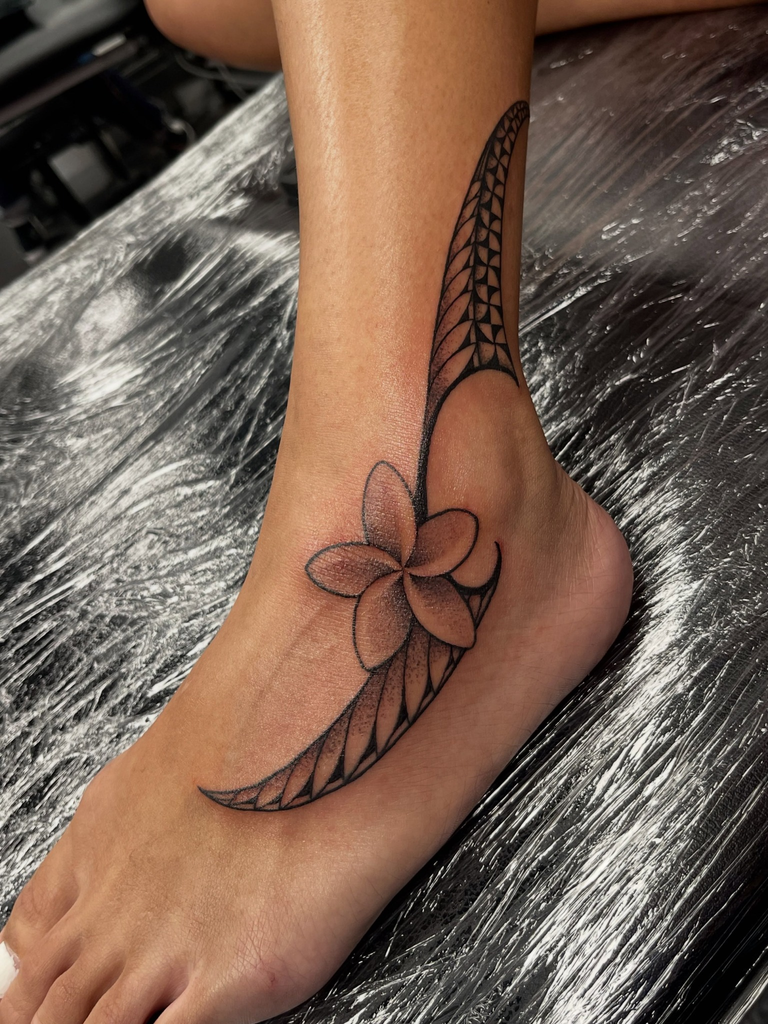
Fine black outlines and restrained shading keep the design light and feminine rather than heavily saturated. The central five-petal flower softens the angular patterning, creating an attractive balance between tropical botanical imagery and Polynesian-inspired ornamentation.
Image 10
This extensive Polynesian-style chest and shoulder tattoo creates a powerful armor-like composition covering the pectoral, shoulder cap, and upper arm. The design is divided into numerous structured panels filled with triangles, interlocking geometric forms, woven patterns, circular motifs, parallel lines, and heavy black borders. A large concentric circular design dominates the shoulder, naturally emphasizing its rounded anatomy and creating an impressive focal point.
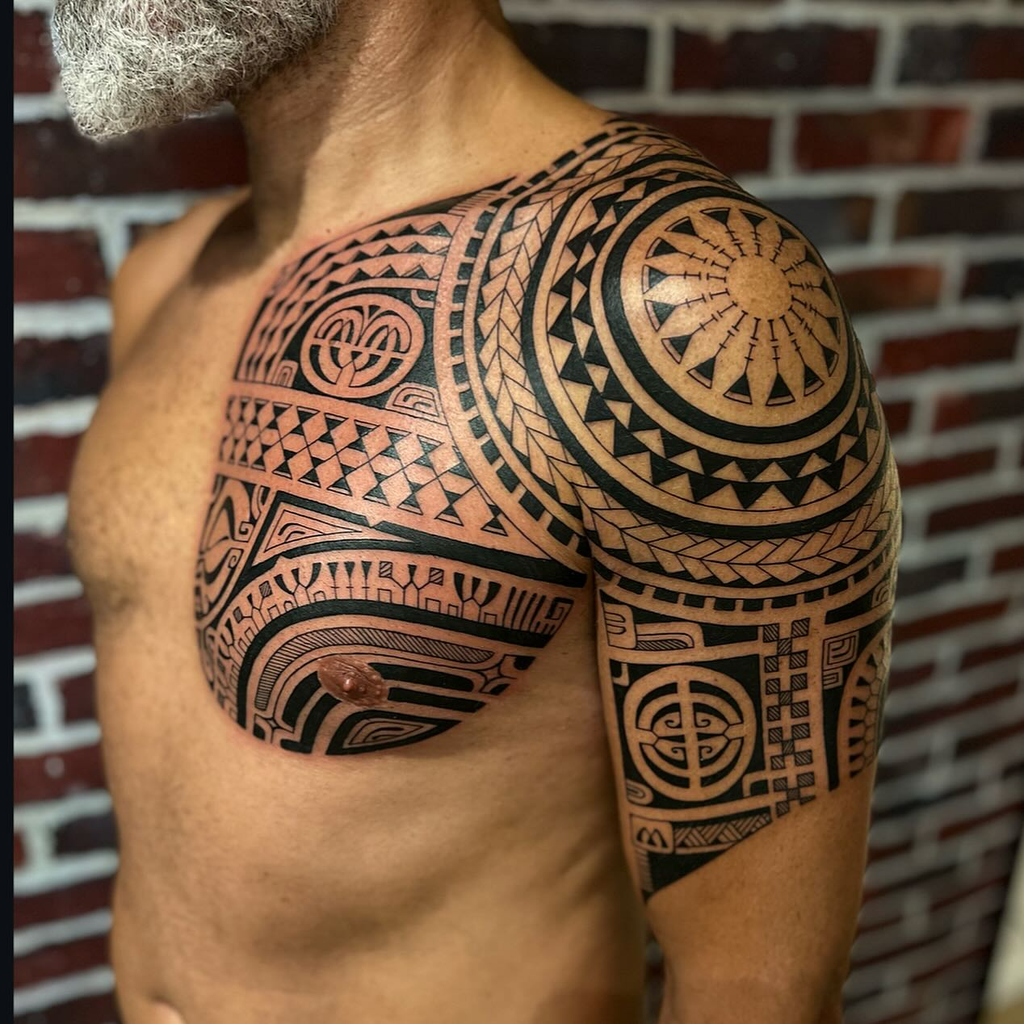
Across the chest, horizontal and curved sections follow the pectoral muscles while maintaining visual continuity with the shoulder. Dense blackwork alternates with exposed skin, producing exceptional contrast and allowing intricate patterns to remain readable despite the tattoo’s considerable scale and complexity.
Image 11
This bold Polynesian-inspired upper-arm tattoo is organized around a large circular centerpiece positioned prominently over the shoulder. The central motif uses symmetrical curved forms surrounded by a dramatic ring of radiating black shapes, creating a sun-like appearance. Below it, diagonal bands divide the arm into contrasting sections filled with diamonds, fine zigzags, linear patterns, spirals, and large flowing ornamental forms.
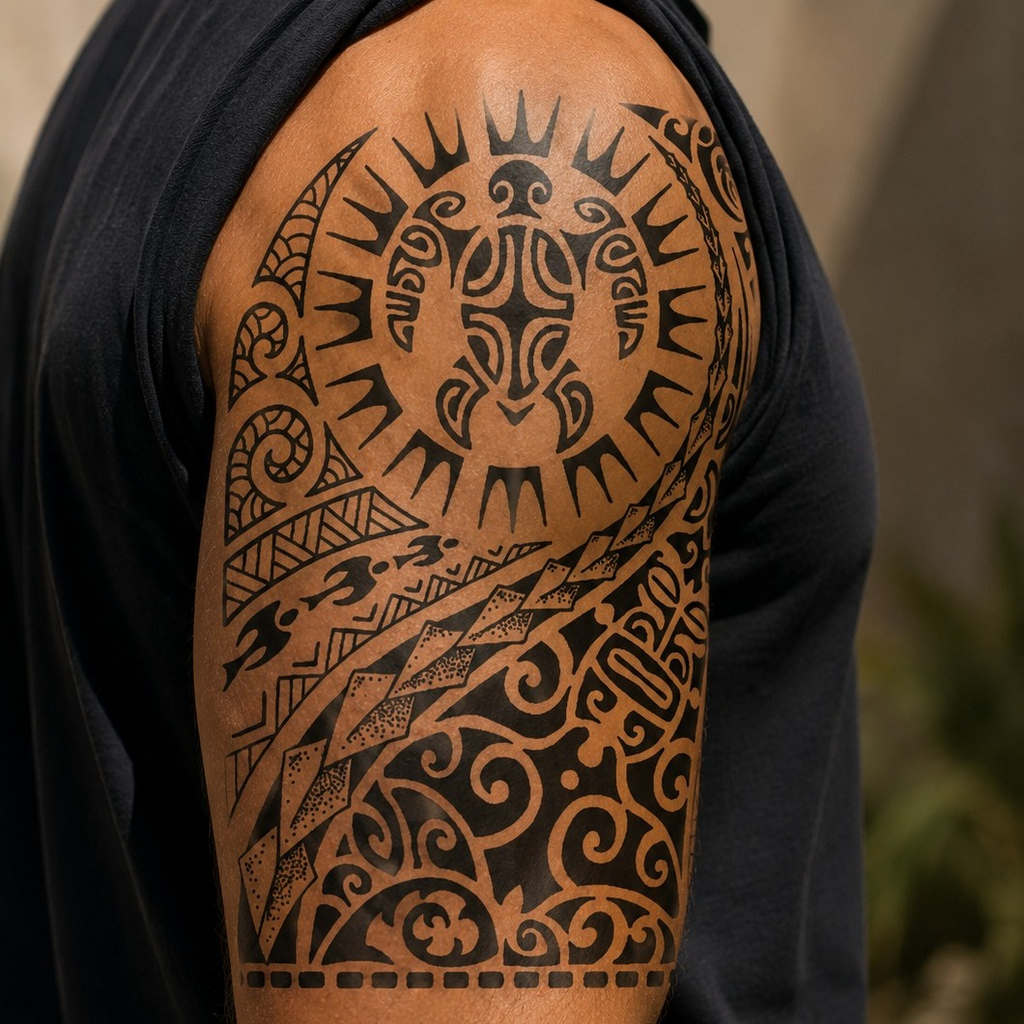
Strong areas of solid black create depth while exposed skin becomes an important part of the composition. The mixture of circular, angular, and curvilinear elements gives the tattoo considerable visual movement, while its placement follows the shoulder and upper arm for a naturally sculpted appearance.
Image 12
This compact Polynesian-inspired ankle band demonstrates how intricate tribal patterning can work effectively on a smaller scale. The tattoo wraps around the lower leg as a broad ornamental cuff composed of several distinct geometric panels. Repeating chevrons, woven linework, triangular arrangements, vertical bands, curved motifs, and spiral details create variety without disrupting the overall continuity.
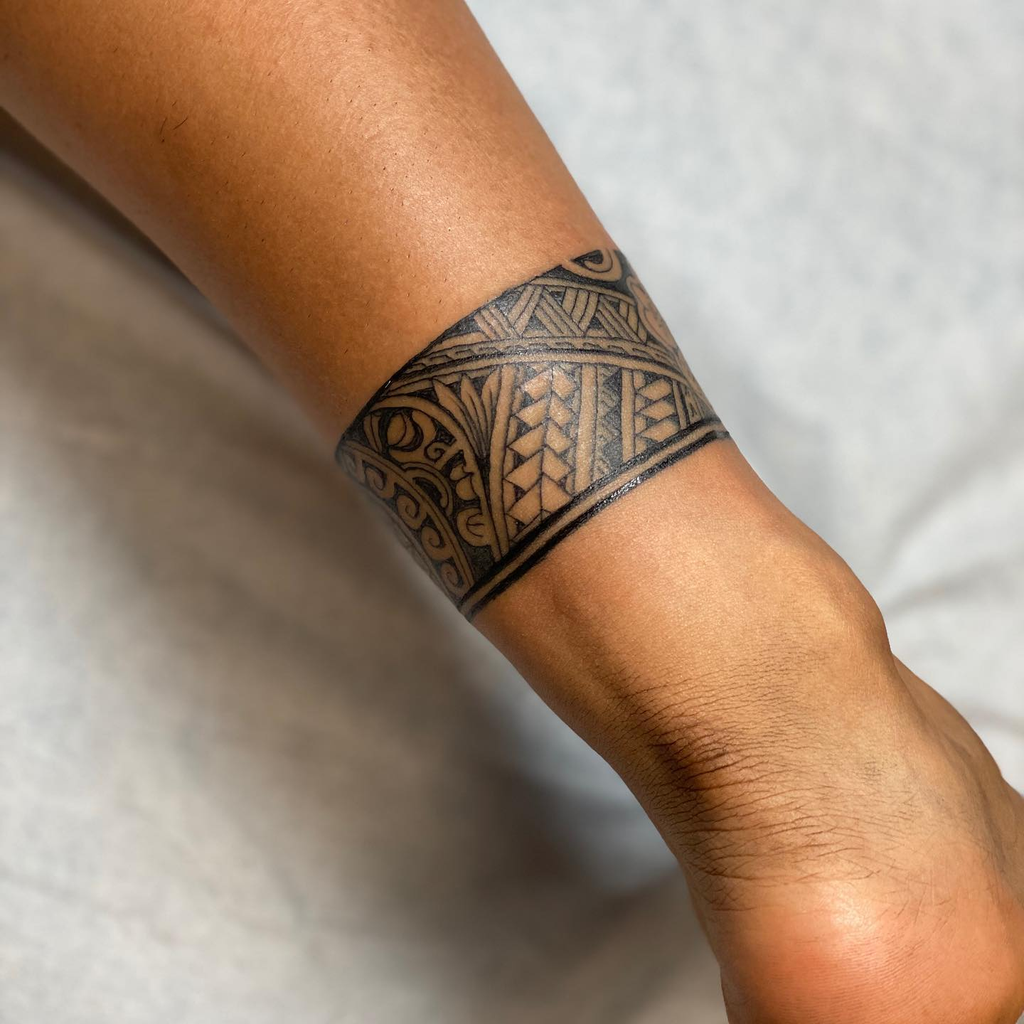
Fine shading adds dimension to selected sections, while dark outlines define the upper and lower boundaries of the band. Its placement immediately above the ankle gives the tattoo the appearance of permanent jewelry. The relatively restrained size makes it an appealing option for someone wanting detailed Polynesian-inspired artwork without extensive coverage.
Image 13
This Polynesian-inspired forearm tattoo combines dramatic spear-like curves with tropical floral imagery. Two elongated patterned forms sweep along the arm, creating a narrow vertical silhouette that emphasizes the natural length of the forearm. Their interiors contain repeating diamonds, angular geometry, fine linear textures, and alternating areas of black shading.
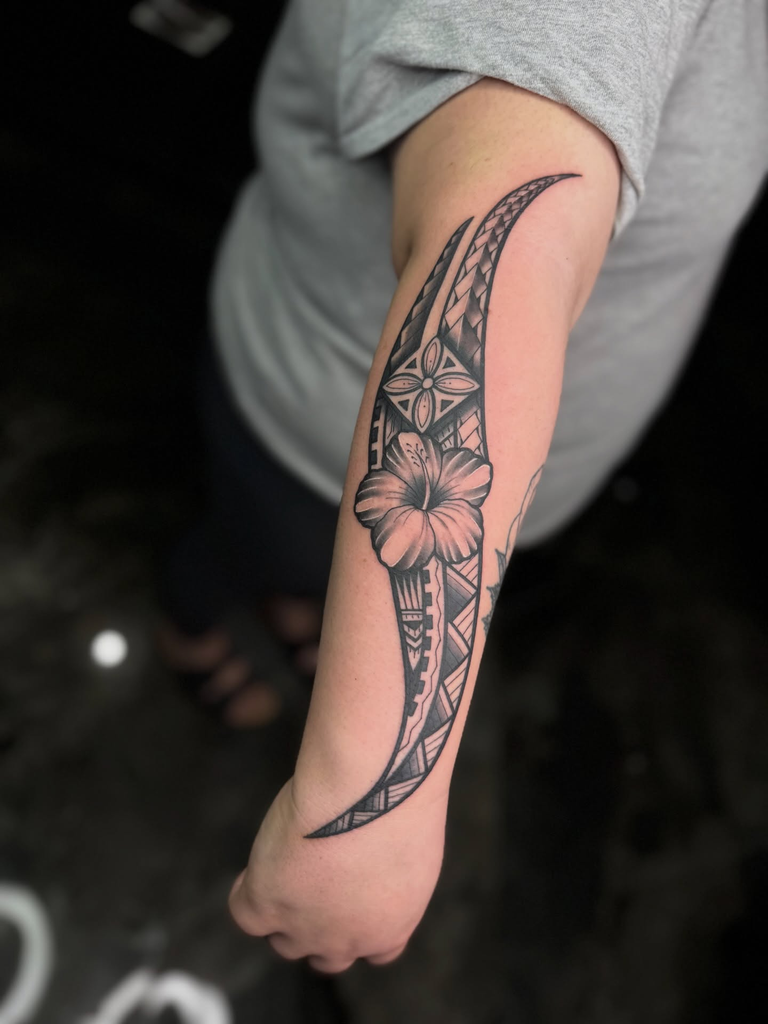
A large hibiscus flower sits near the center as the primary focal point, accompanied by a smaller four-petal floral motif positioned above it. The realistic softness of the hibiscus contrasts beautifully with the structured tribal elements. Generous negative space surrounding the design prevents it from feeling overly dense and gives the overall composition an elegant, contemporary appearance.
Image 14
This Polynesian-inspired hand tattoo uses sweeping curved forms and intricate internal patterning to create a compact but highly expressive composition. The design spreads diagonally across the back of the hand, following its natural shape rather than forming a rigid symmetrical panel. Spirals, hook-like curves, fine parallel lines, triangular sections, and layered geometric borders appear throughout the piece.
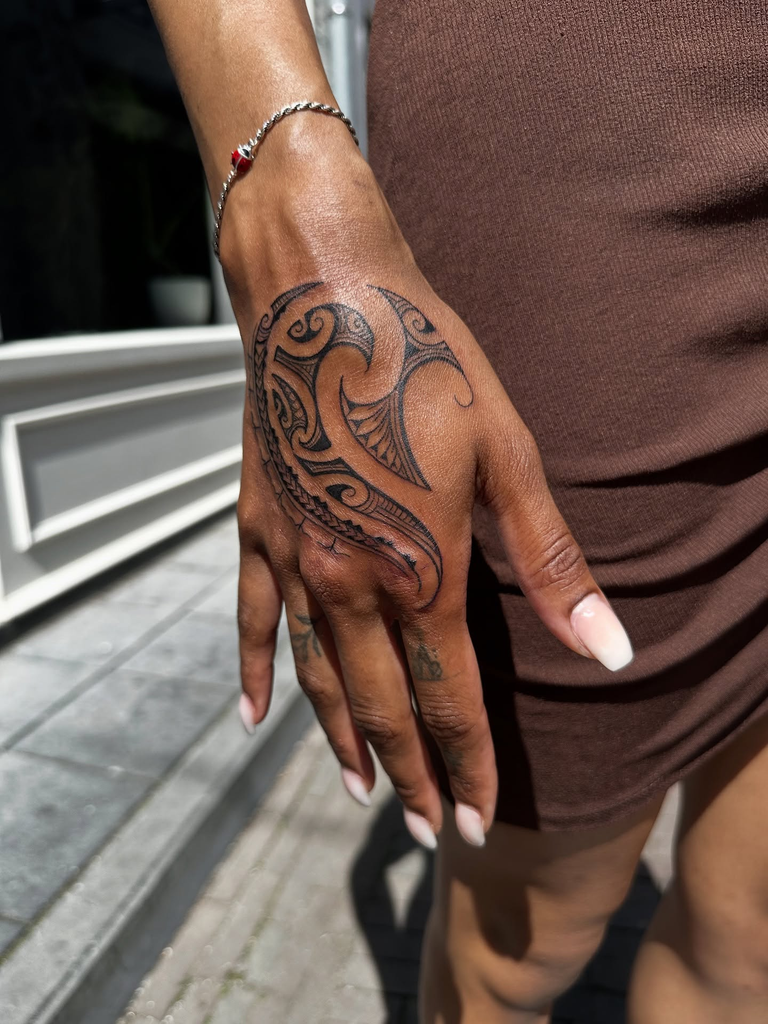
Large areas of untouched skin separate the darker motifs, helping each component remain clearly visible despite the tattoo’s relatively small placement. The strongest curves frame the central design and create a sense of continuous movement, while the tapered ends give the tattoo a graceful finish near the wrist and fingers.
Image 15
This Polynesian-style forearm sleeve is constructed from overlapping diagonal bands that wrap dynamically around the arm. Each section contains a different geometric vocabulary, including pinwheel-like forms, zigzag lines, chevrons, nested rectangles, leaf-shaped details, parallel stripes, and repeated angular borders. Broad areas of blackwork separate the patterned bands and establish strong contrast, while narrow negative-space channels prevent the composition from becoming visually congested.

Rather than relying on a single central image, the tattoo achieves its impact through repetition, layering, and directional movement. The diagonal arrangement complements the cylindrical shape of the forearm especially well, creating the impression that the patterns continuously spiral around the limb.
Image 16
This detailed Polynesian-inspired forearm tattoo blends strong geometric structure with a prominent tropical flower near the wrist. Large woven and interlocking patterns dominate the central portion, accompanied by sweeping black curves, triangular borders, stepped motifs, and narrow decorative bands. Carefully controlled shading gives several geometric sections additional depth, making them appear layered rather than completely flat.
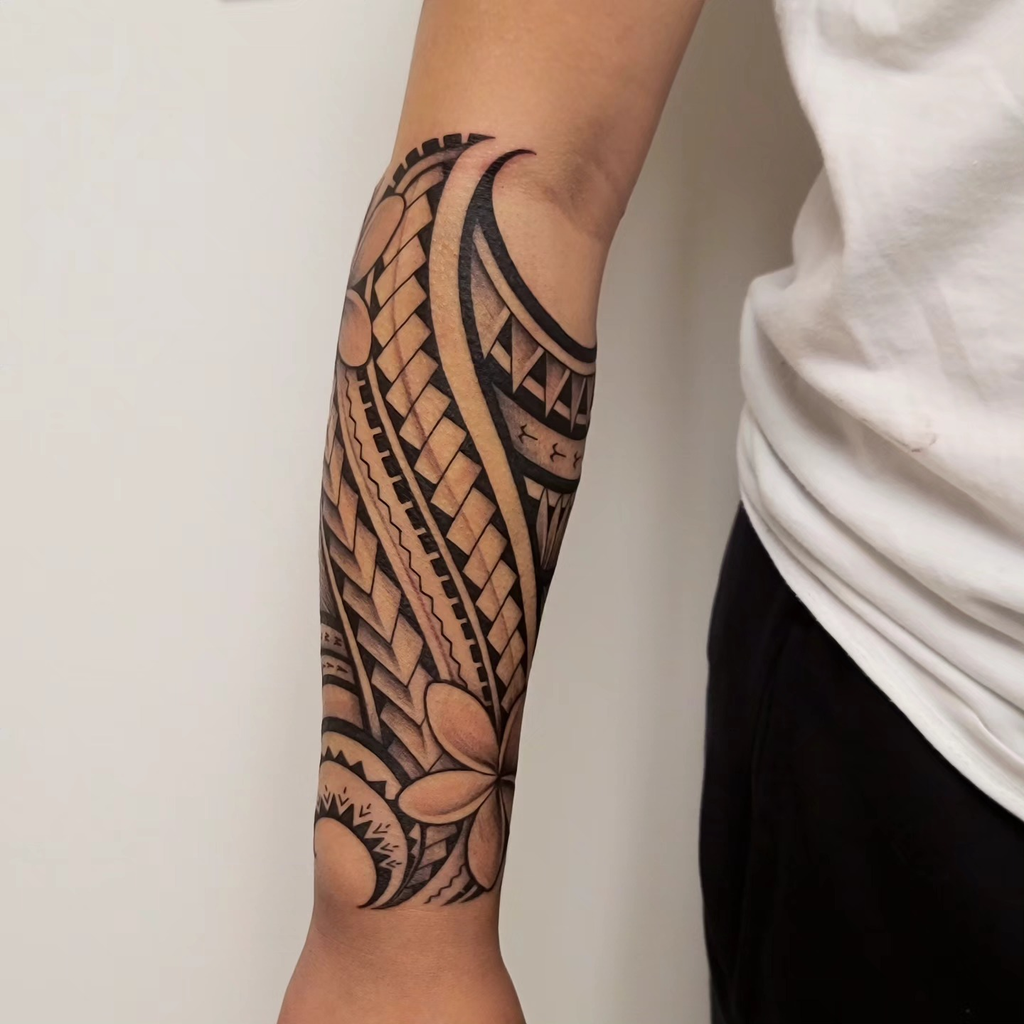
Near the lower forearm, a five-petal plumeria-style flower introduces a softer organic focal point and provides an attractive contrast to the surrounding angular geometry. The composition follows the forearm vertically while curved elements wrap toward its sides, producing a substantial sleeve-like effect without relying entirely on solid black coverage.
Image 17
This elaborate Polynesian-inspired forearm tattoo uses layered geometric bands and sweeping curves to create a highly personalized sleeve composition. Repeating triangles, chevrons, woven patterns, fine linear details, and bold black borders follow the cylindrical shape of the arm, producing continuous visual movement. Large curved motifs serve as focal points, while carefully shaded sections provide depth between the denser patterns.

Scripted names are incorporated directly into open areas of the design, adding a meaningful personal dimension without interrupting the overall flow. The combination of intricate pattern work, negative space, soft shading, and customized lettering makes this an excellent reference for a narrative Polynesian-inspired forearm tattoo.
Tattoo Aftercare Tips
Polynesian tattoos often feature extensive blackwork, repeated patterns, and strong geometric forms:
- Wash the tattoo gently with mild, fragrance-free soap.
- Apply moisturizer according to your tattoo artist’s aftercare instructions.
- Avoid scratching or picking at peeling skin.
- Wear loose clothing to minimize friction against the tattoo.
- Avoid swimming and prolonged soaking during healing.
- Protect the tattoo from direct sunlight while it heals.
- Once healed, use sunscreen to help minimize fading.
Proper aftercare helps maintain strong black areas, crisp patterns, and clear linework.
Conclusion
Polynesian tattoos can be visually striking, but their significance extends far beyond aesthetics. The many tattoo traditions found throughout Polynesia have their own histories, conventions, and cultural meanings. Whether you have Polynesian heritage or simply appreciate Pacific tattoo art, careful research and collaboration with a culturally knowledgeable artist can help ensure your design is thoughtful, respectful, and appropriate.
Frequently Asked Questions (FAQ)
Q1: What do Polynesian tattoos symbolize?
There is no single universal meaning. Depending on the culture and design, tattoos can relate to identity, genealogy, family, community, achievements, responsibilities, protection, or personal history.
Q2: Are all Polynesian tattoos the same style?
No. Samoan, Māori, Marquesan, Hawaiian, Tahitian, and other Polynesian tattoo traditions have distinct histories, techniques, motifs, and cultural contexts.
Q3: Where are Polynesian tattoos commonly placed?
Depending on the tradition and design, placements can include the arms, shoulders, chest, back, thighs, legs, and larger areas that allow patterns to follow the body’s contours.
Q4: Can Polynesian tattoos be incorporated into a sleeve?
Yes. Large interconnected patterns can flow naturally around the arm, but culturally significant designs should be planned with someone knowledgeable about the relevant tattoo tradition.
Q5: Is it important to research Polynesian tattoo symbols first?
Yes. Online explanations can oversimplify or misidentify traditional motifs. Researching the specific culture and consulting a knowledgeable practitioner is preferable when choosing culturally significant imagery.
