Low maintenance shag haircuts for women combine relaxed layers, natural movement, and practical styling without demanding a perfectly polished finish. The layered structure encourages texture to develop naturally, making shags particularly appealing for women who prefer air-drying, finger-styling, or quick refreshes instead of lengthy heat-styling routines.
These seventeen shag haircuts cover short, medium, and longer lengths across straight, wavy, curly, fine, and thick textures. Each style emphasizes wearable layering that can retain its character even when styling is intentionally minimal.
The Relaxed Structure That Gives Easy Shags Staying Power
Low maintenance shags remain appealing because their signature texture does not depend on every strand sitting perfectly in position. Slightly irregular layers, natural bends, separated ends, and crown movement actually strengthen the hairstyle’s casual character, making everyday imperfections easier to embrace.
Their grow-out potential also adds practical value. Curtain bangs can gradually become facial layers, short shags can transition into medium cuts, and softer layers remain wearable as they lengthen. This flexibility allows the haircut to evolve without immediately losing its recognizable movement.
Soft Shag With Curtain Bangs
A soft shag with curtain bangs creates gentle movement without relying on dramatically disconnected layers. Longer facial pieces blend smoothly into the overall shape, while subtle crown layering provides enough lift to keep the hairstyle relaxed and dimensional between washes.

Apply lightweight mousse to damp roots and allow the lengths to air-dry or finger-dry naturally. Direct the curtain bangs outward while they are slightly damp, encourage existing bends with your hands, and finish with minimal texture spray.
Wash-and-Wear Wavy Shag
Natural waves pair naturally with shag layering because shorter sections encourage bends to develop at different heights. Keeping the overall shape loose allows the haircut to look intentionally tousled without requiring every wave to be curled or carefully arranged.

Apply lightweight wave foam to damp hair and scrunch gently from the ends upward. Air-dry whenever possible, avoid touching the hair repeatedly while drying, and separate only a few sections afterward to create additional crown movement.
Short Shaggy Pixie
A short shaggy pixie combines cropped convenience with choppy upper layers that naturally create movement. The intentionally separated crown means minor variations in texture contribute to the style rather than requiring correction, making this cut particularly practical for quick routines.

Work airy styling foam through damp hair before finger-drying the crown upward and sideways. Sweep the fringe loosely into place, define a few selected pieces with lightweight texture paste, and leave the remaining layers naturally imperfect.
Shoulder-Length Shag
A shoulder-length shag offers enough length for versatility while strategic layers prevent the hairstyle from becoming heavy or shapeless. Longer lower sections also provide enough weight for easy ponytails, clips, and loose everyday styling when wearing the hair down is inconvenient.

Apply lightweight mousse around the crown before air-drying or rough-drying the lengths. Encourage natural texture by scrunching gently, arrange the facial layers with your fingers, and use dry texture spray only when additional separation is needed.
Curly Shag With Soft Fringe
A curly shag distributes natural volume through multiple lengths, allowing curls to spring more freely without concentrating excessive fullness around the lower perimeter. Soft curly fringe adds facial framing while blending naturally into the shorter crown sections.

Apply curl cream and lightweight gel to thoroughly wet hair before scrunching upward. Air-dry or diffuse using gentle airflow, avoid separating the curls while damp, and lift the roots carefully once completely dry for additional crown volume.
Straight Hair Shag With Long Layers
Straight hair can wear a low maintenance shag when the layers are longer and strategically placed rather than aggressively chopped. Subtle crown movement prevents flatness, while longer sections preserve enough weight for the hairstyle to fall naturally without constant reshaping.

Apply lightweight root mousse before blow-drying quickly with your fingers or allowing the hair to air-dry. Direct the facial pieces away from your face, separate selected ends with texture spray, and avoid curling every layer individually.
Shaggy Bob With Side Bangs
A shaggy bob keeps the overall length compact while incorporating enough layering to create relaxed movement around the crown and sides. Side bangs introduce directional framing without requiring the frequent precision associated with shorter, straighter fringe styles.

Blow-dry or air-dry the bangs toward their natural side before scrunching the remaining hair gently. Add lightweight texture spray once dry, tousle the crown with your fingertips, and allow several ends to remain irregular for an effortless finish.
Soft Wolf Shag
A soft wolf shag combines shorter crown layers with longer sections through the sides and back, but avoids extremely disconnected proportions. The restrained contrast creates natural volume while keeping the haircut wearable as the layers gradually grow longer.

Apply root-lifting foam around the crown and finger-dry upward while allowing the lower sections to dry naturally. Encourage existing waves or bends, separate selected layers after drying, and avoid excessive styling that makes the texture appear overly deliberate.
Fine Hair Shag With Wispy Bangs
A fine-hair shag works best when layering remains controlled so the perimeter retains enough density. Wispy bangs provide lightweight facial framing, while carefully positioned crown pieces create movement without removing excessive hair from already delicate lengths.

Apply airy volumizing mousse near the roots and finger-dry the crown upward. Style the fringe using gentle airflow, keep the lower sections relatively full, and use dry texture spray sparingly so the fine strands remain lightweight and movable.
Thick Hair Shag With Internal Layers
Internal layering can make thick hair considerably easier to manage by removing strategic bulk without leaving the exterior excessively feathered. The resulting shag maintains a substantial perimeter while allowing natural texture to move more freely throughout the crown and middle lengths.

Apply lightweight smoothing cream to damp hair before air-drying or rough-drying according to your texture. Encourage movement with your fingers, define only selected sections, and avoid overworking the layers with numerous styling products or repeated heat passes.
Medium Shag With Bottleneck Bangs
Bottleneck bangs add soft forehead framing to a medium shag through shorter center pieces and gradually longer outer sections. Because the edges blend naturally into facial layers, the fringe can grow more gracefully than a sharply defined traditional bang.

Dry the fringe forward while damp before directing the longer outer pieces sideways. Allow the remaining layers to air-dry with lightweight mousse, encourage natural bends with your hands, and finish with minimal texture spray around the crown.
Tousled Shaggy Lob
A shaggy lob combines shoulder-grazing versatility with relaxed layering that encourages natural movement. Keeping the lower perimeter reasonably substantial prevents the haircut from appearing overly wispy, while shorter upper sections provide enough texture to reduce everyday styling effort.

Apply lightweight styling foam and rough-dry with your fingers or air-dry naturally. Scrunch any existing waves, lift the crown once dry, and use a small amount of dry texture spray when additional separation is desired.
Feathered Shag With Long Fringe
A feathered shag creates softer movement than heavily choppy versions, using airy layers that sweep naturally around the face and shoulders. Longer fringe blends into the surrounding sections, reducing the need for frequent bang trims while maintaining flexible facial framing.

Apply volumizing mousse before finger-drying or quickly blow-drying the crown. Direct the front pieces away from your face, allow the remaining layers to settle naturally, and separate the feathered ends gently once the hair is completely dry.
Natural Texture Short Shag
A short shag designed around natural texture can make daily styling remarkably straightforward. Compact length reduces drying time, while irregular crown layers allow waves, curls, or bends to develop naturally without needing to be straightened into a uniform finish.

Apply texture foam or curl product suited to your natural pattern after washing. Arrange the crown using your fingers, air-dry whenever practical, and gently lift the roots once dry while leaving the individual texture variations visible.
Long Shag With Face-Framing Layers
A longer shag provides layered movement while retaining enough length for ponytails, buns, and other practical everyday styles. Face-framing pieces introduce softness around the cheekbones and jaw, while restrained crown layering prevents longer hair from becoming excessively heavy.

Apply lightweight mousse around the roots and allow the lengths to air-dry whenever possible. Direct the front layers away from your face, encourage natural waves through gentle scrunching, and avoid styling every individual layer separately.
Choppy Shag With Grown-Out Bangs
Grown-out bangs naturally complement a choppy shag because their longer length blends into the surrounding facial layers. The intentionally relaxed structure accommodates uneven movement, making the hairstyle forgiving when several weeks pass between detailed reshaping appointments.

Apply texture foam to damp hair before finger-drying in several directions. Sweep the longer fringe sideways or divide it near the center, define selected crown pieces with dry spray, and leave the remaining sections deliberately loose.
Wavy Shag With Off-Center Part
An off-center part adds subtle asymmetry to a wavy shag while shifting natural crown volume slightly toward one side. Layering encourages existing waves to form at different levels, giving the haircut dimension without requiring daily curling or elaborate blow-drying.
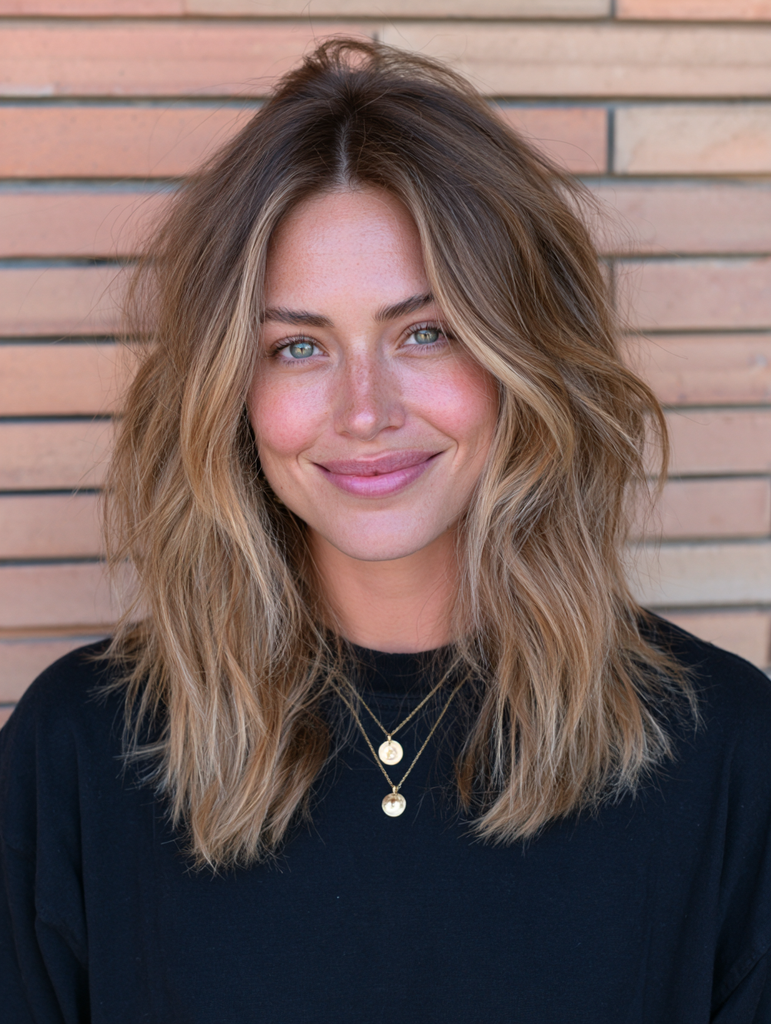
Apply wave-enhancing foam to damp hair, establish the part, and scrunch gently upward. Air-dry or diffuse briefly, then lift around the crown with your fingertips and refresh flattened waves between washes using a lightweight mist.
How to Style Low Maintenance Shag Haircuts for Women
The easiest shag routine begins with working alongside your natural texture. Apply lightweight mousse for straight or fine hair, wave foam for bends, or curl cream and gel for curls. Scrunching, finger-drying, and air-drying can emphasize the haircut’s layered movement without requiring repeated heat styling.
Avoid making every layer look identical. Shags benefit from irregular separation, slightly undone ends, and natural variation. Between washes, water mist, dry shampoo, or lightweight texture spray can revive movement without requiring a complete styling reset.
Final Thoughts
Low maintenance shag haircuts for women offer an appealing combination of relaxed texture, flexible layering, and manageable everyday styling. Short shaggy pixies, shoulder-length cuts, curly shags, soft wolf styles, textured lobs, and longer layered versions provide options across numerous hair types.
The easiest version should cooperate with your natural density and texture instead of demanding constant correction. With thoughtful layering and simple styling techniques, a shag can remain modern, expressive, and effortlessly wearable while growing beautifully between appointments.
